



22 October 2025 | Engineering
Global Learning, Local Driving: Lessons From Japan
Our expansion to Japan put the Wayve AI Driver to the test in one of the world’s most complex driving environments. Within months, our AI adapted to Tokyo’s roads, improved global performance, and powered Nissan’s next-generation ProPILOT prototype—showcasing the scalability of AV2.0.
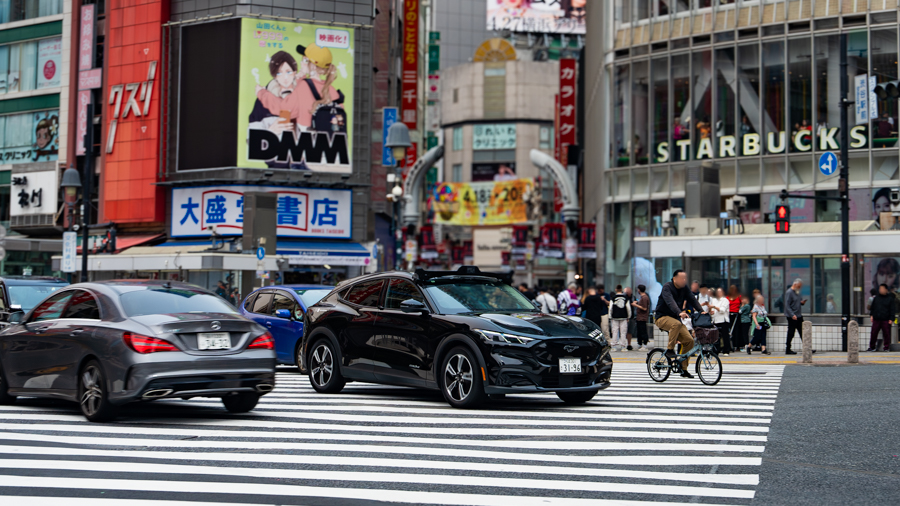
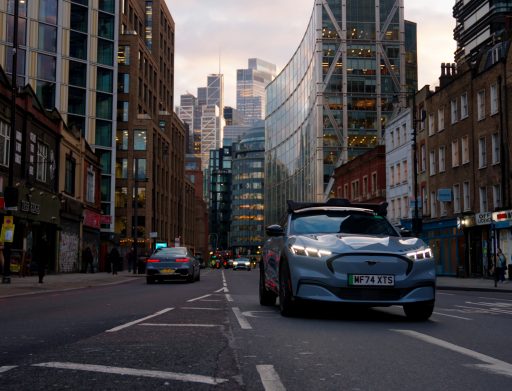
Japan is one of the most complex driving environments in the world. Its roads are narrow and crowded, its road signage and etiquette are intricate, and its weather can change in an instant. For the Wayve AI Driver, expanding to Japan is the ultimate test of adaptability.
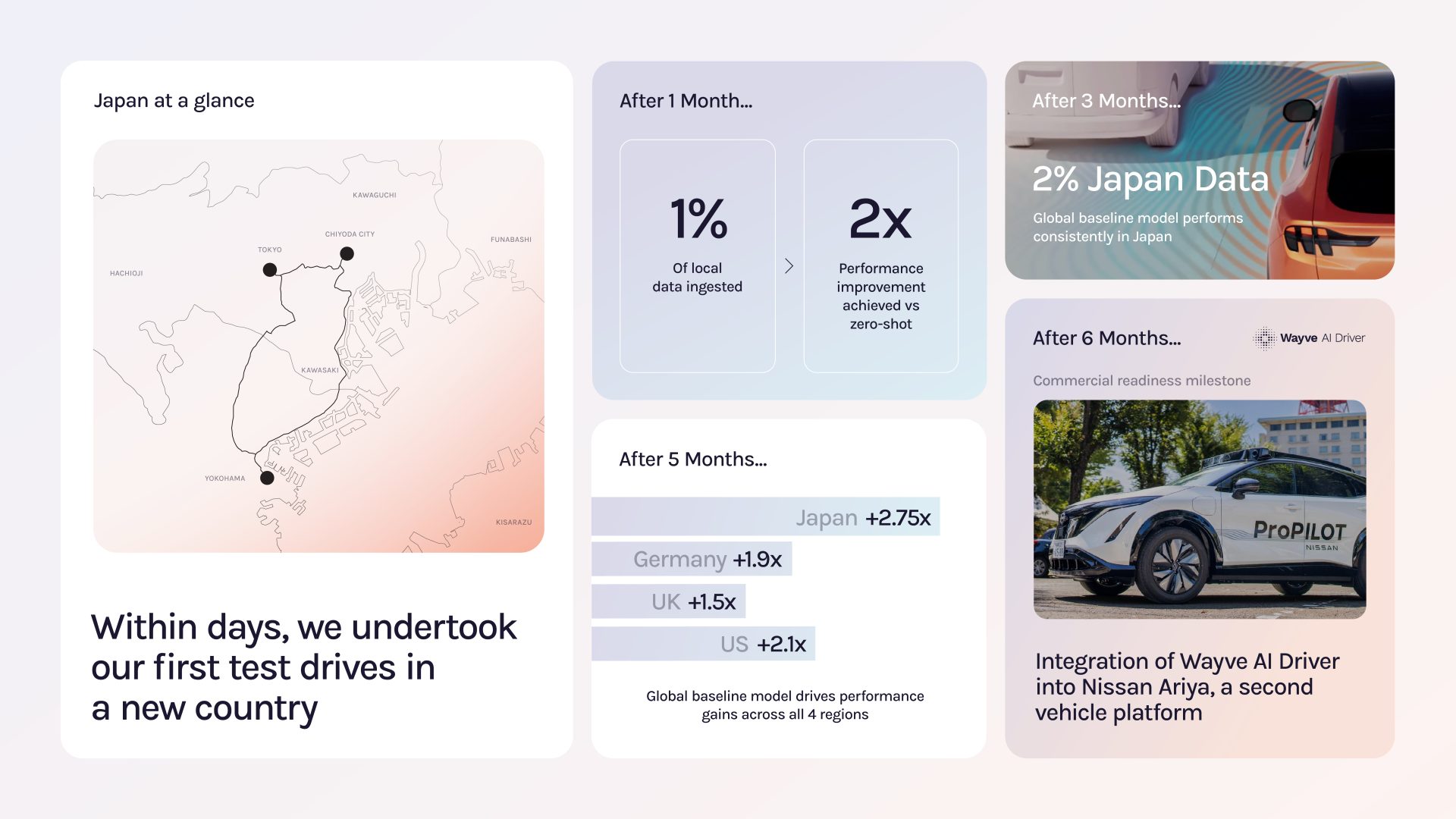
Earlier this year, we opened a new Testing and Development Center in Japan and launched our development fleet in Yokohama. Within days, the Wayve AI Driver was driving in a brand new country. It did so without high-definition maps or re-engineering, leveraging the same AI model that has already learned to drive in London, San Francisco, Stuttgart, and countless other cities. What followed proved again that our AV2.0 approach can scale to new, unseen environments faster and more efficiently than other self-driving methods.
The Foundation Behind a Global Driving Intelligence
At the core of Wayve’s AV2.0 approach is our Wavye Foundation Model—a general-purpose world model that serves as the central intelligence behind the Wayve AI Driver. This model learns from a vast and diverse corpus of global driving data collected from our R&D fleet, partner fleets, and other sources. Through this data diversity, it develops a rich understanding of how the world moves: from the physics of motion to the subtleties of human and vehicle behaviour.
The foundation model acts as a shared source of knowledge across all of our deployments. It learns the universal principles of driving—how road users behave, how infrastructure is structured, and how traffic flows—so that the AI can reason and make decisions in complex, unstructured environments. Much like a human mental model of the world, it builds predictive representations that allow it to anticipate and respond intelligently to new situations.
We periodically train and scale new versions of the foundation model on significantly larger and more diverse datasets than those used for our on-road driving models. Each new iteration delivers foundational improvements that raise performance across all markets, including those where we have never driven before.
From this core foundation model, we derive a family of driving models—purpose-built versions designed for deployment and fine-tuning on real roads. These driving models can take many forms. Early in our entry into a new market, such as Japan, we may develop a local driving model that’s fine-tuned with locally collected driving data to help the AI learn that region’s specific traffic patterns and road conditions. Over time, we integrate those learnings back into a global baseline model, which combines knowledge from every market to create a single, high-performing model that can be rolled out everywhere.
Together, the foundation and driving models form the backbone of Wayve’s embodied AI technology. The foundation model provides the global intelligence; the driving models translate that intelligence into safe, scalable performance on the road—learning locally but improving globally.
This adaptability, known as generalization, enables the Wayve AI Driver to perform safely in new countries with only a small amount of local data—much like an experienced driver can adapt to unfamiliar roads after just a few hours behind the wheel.
For years, Wayve has been investing in the development of this embodied AI technology that makes AV2.0 possible. We have curated one of the world’s most diverse datasets for driving, spanning geographies, vehicle platforms, and geographies. This diversity, combined with advanced techniques for extracting the most learning signal from every drive, provides Wayve and its customers with a scalability advantage that is difficult to replicate.
From Global Intelligence to Local Driving
When entering a new market, we begin by testing how the AI Driver performs “out of the box,” before any local data or fine-tuning. This is known as zero-shot performance, and it shows how well our globally trained AI can generalize to an environment it has never seen before. Unlike traditional systems, which require pre-mapping and extensive localization before they can even move, our AI can drive immediately in new, unseen places. However, initial performance is naturally lower than in markets where we test and train more extensively.
After establishing this baseline, we used the data collected from early testing to begin targeted local learning. In Japan, this process took only a few weeks. With just 1.3% of locally collected Japan driving data added to our dataset, we achieved a 2X improvement in performance compared to the zero-shot baseline. Within two months of deployment, the Wayve AI Driver was navigating dense urban Tokyo with impressive fluency and confidence.
If we had started from scratch and trained a model solely on Japan data, it could have taken years of local data collection to reach similar results. Instead, by adapting our existing driving models with a small amount of local data, we can achieve the same performance in a matter of weeks.
Integrating Japan Data into our Global Baseline Model
After achieving strong local performance in Tokyo, our next focus was on integrating Japan data into our global baseline model—the driving model deployed across all geographies. The goal was to improve Japan’s performance without causing regressions in other regions such as the UK, the US, and Germany.
Over several weeks of additional data collection, Japan data grew to roughly 2% of the global driving dataset. We refined the training recipe and adjusted model parameters to help the global model better interpret Japan’s unique driving environment, including specific road signs and traffic patterns. These updates brought Japan’s results within the expected range relative to our global baseline average, accounting for differences in traffic density, route complexity, and local driving conditions.
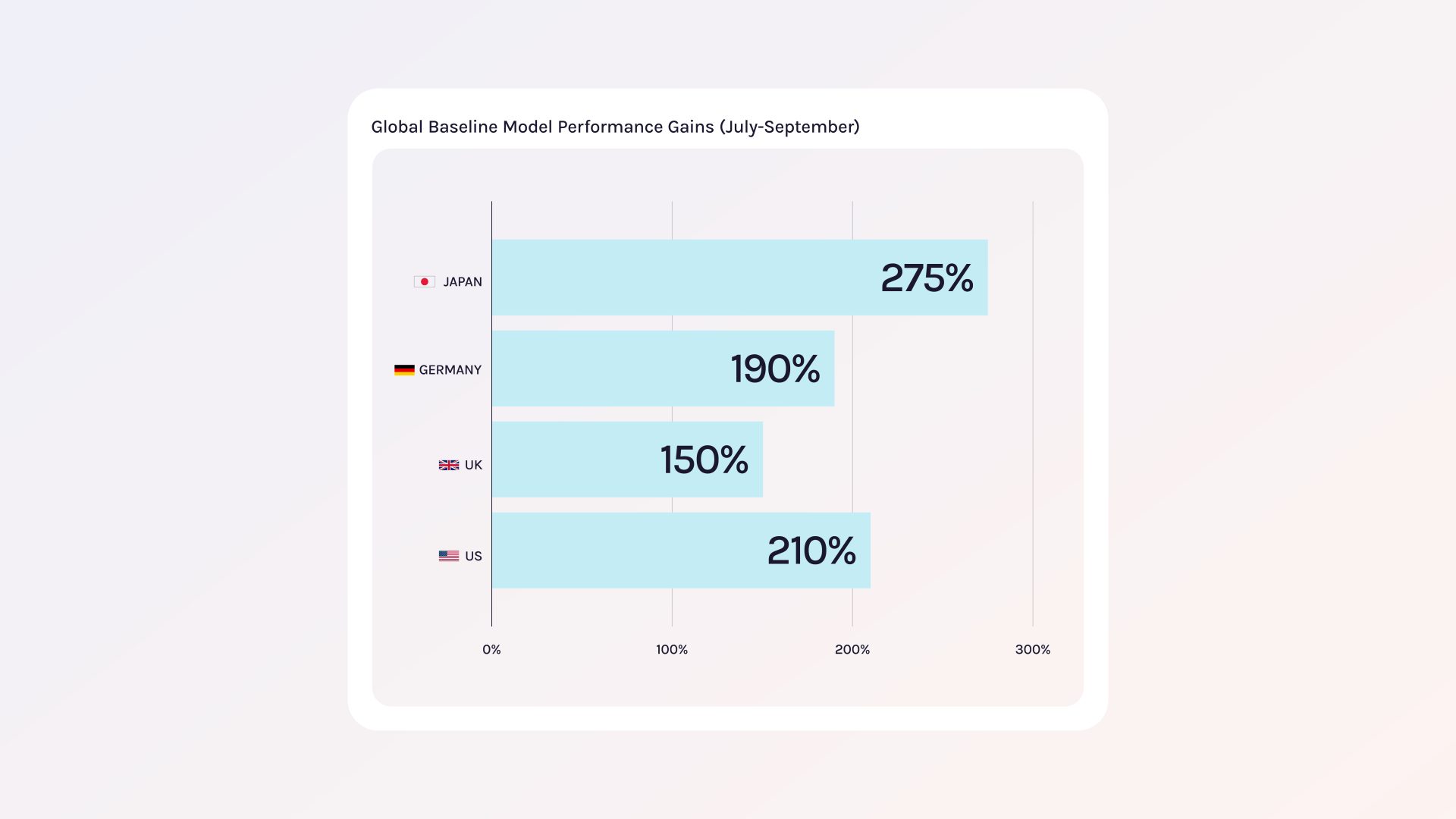
Once that level of performance was achieved, we continued to optimize the model and training recipe to drive improvements across all regions. By late September, we observed significant and consistent gains across every geography we test in:
Adding Japan Understanding into our Wayve Foundation Model
While adapting our driving models delivered strong local and global improvements, we also updated our foundation model to capture greater data diversity and strengthen its world understanding.
To enhance this model’s representation of Japan’s driving environment, we added data from our partner S.RIDE for the first time. This dataset included real-world examples of Japan’s dense urban roads, high pedestrian activity, complex intersections, and distinctive road signage—scenarios that helped the model learn to interpret a broader range of global driving contexts.
Following this update, we observed measurable gains in performance:
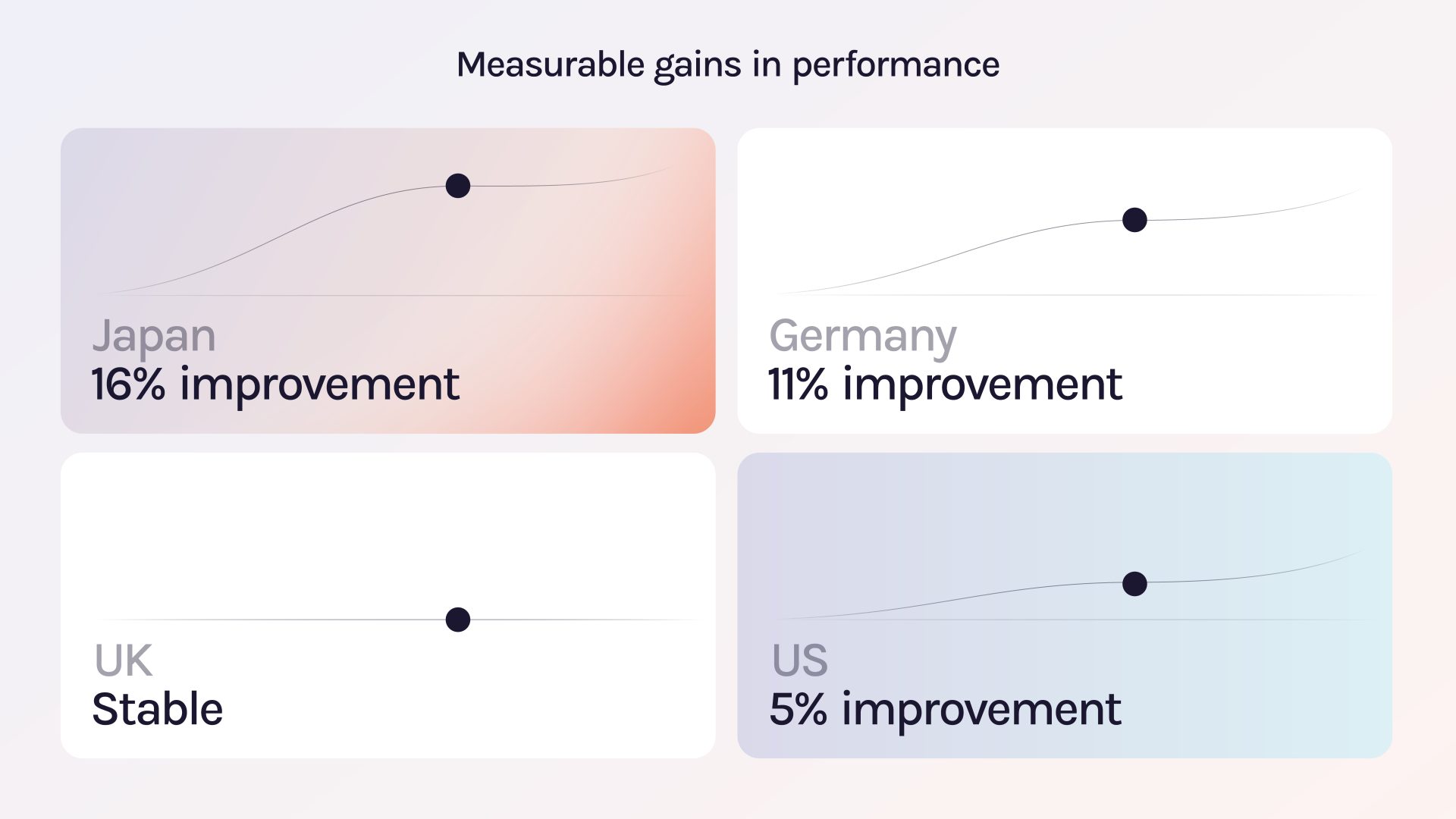
Each foundation model update incorporates more diverse data, driving improvements across many markets, especially in newer regions like Japan and Germany, where we have less local data compared with the UK, where testing has been underway for years.
Expanding to New Vehicle Platforms with Nissan Ariya
As part of our plans in Japan this year, we worked to extend our progress beyond our own development vehicles. Because we were able to bring up a highly performant model within months, we could quickly leverage it to support development with OEM partners such as Nissan.
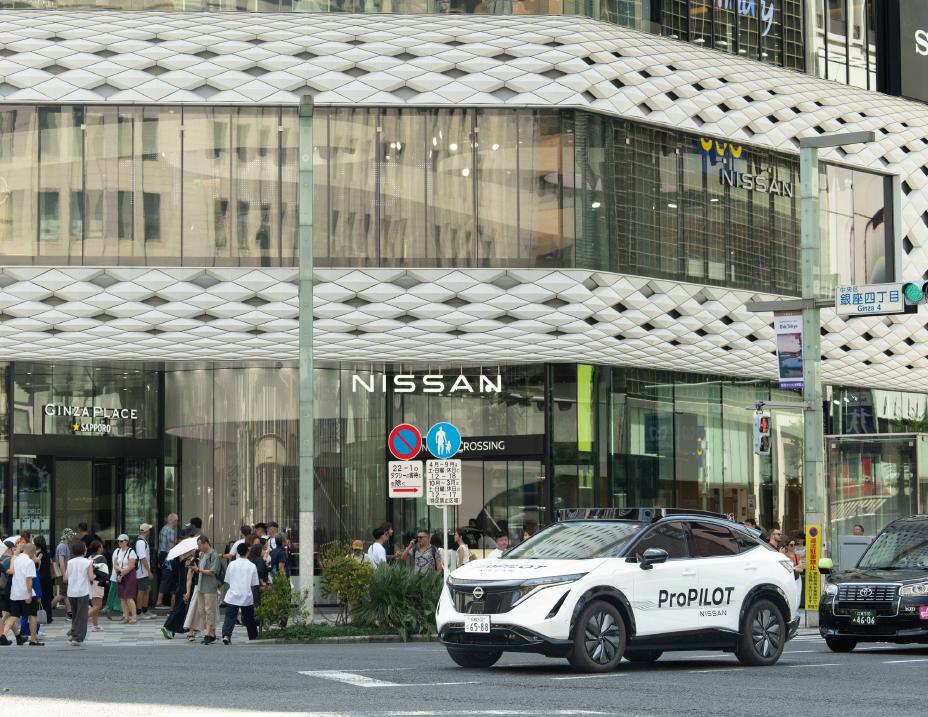
In collaboration with Nissan, we integrated the Wayve AI Driver into the Nissan Ariya as part of its next-gen ProPILOT advanced driver-assist prototype, unveiled in September. During these demonstrations, the Nissan Ariya, powered by Wayve’s AI Driver software and Nissan’s Ground Truth Perception technology with next-generation LiDAR, drove safely and confidently through the complex streets of central Tokyo.
This collaboration demonstrated the rapid transfer of our AI from internal development vehicles to integration within an automaker’s vehicle prototype, showcasing the scalability of AV2.0 and our data-driven software approach.
First look: Nissan next-gen ProPILOT driver assist tech, powered by Wayve AI Driver software and Nissan’s Ground Truth Perception and next-generation LiDAR.
The Road Ahead
From the UK to Japan, one theme continues to define our progress: diversity drives intelligence. Every new road, dataset, and vehicle strengthens the Wayve AI Driver’s ability to understand and navigate the world.
Our work in Japan this year has shown how quickly we can scale performance in a new market and transfer that intelligence across vehicles and regions. In just a few months, we advanced from first drives in Tokyo to integration with Nissan’s next-generation ProPILOT prototype.
To mark this milestone, SoftBank Group Corp.’s Chairman and CEO Masayoshi Son joined Wayve Co-founder and CEO Alex Kendall for “The Tokyo Challenge”, an exciting drive through Tokyo that put the Wayve AI Driver to the test. Having followed Wayve’s journey from London to Tokyo, Son experienced firsthand how far embodied AI has come and how close it is to unlocking truly global driving intelligence.

4 November 2026 | Engineering
Language Should Ride Shotgun, Not Stall the Control Loop
In the final part of our series exploring our approach to learned safety, we look at the role of semantic intelligence in physical control and safety assurance.
Read more
4 November 2026 | Engineering
Validating the AI Driver
In Part 2 of our series exploring our approach to learned safety, we explore how Validation 2.0 fundamentally reshapes how enterprises develop and deliver AV products beyond mere efficient scaling.
Read more
4 November 2026 | Engineering
Building a Safe AI Driver
In Part 1 of our series exploring our approach to learned safety, we explore how safety assessment is part of how the AI Driver makes decisions using the Wayve Learned Safety Envelope (LSE).
Read more