





4 November 2026 | Engineering
Building a Safe AI Driver
Embedding learned safety into driving behavior.
In autonomous driving, the hardest situations are often the ones nobody anticipated. A cyclist emerging from behind a parked car, an unexpected road diversion, or an unfamiliar interaction between road users can expose the limits of systems built on maps and predefined logic.
At Wayve, we have held a long-standing conviction that end-to-end embodied AI offers a different way to solve this long-tail problem: by learning from experience rather than a series of rules that attempt to describe every possible driving situation in advance.
It is often assumed that this type of model is a “black box” and therefore unfit for something as safety-critical as driving.
That assumption is wrong.
A well-designed end-to-end driving architecture can be engineered with safety built into its design, transparent in the ways that matter, and organized around clear, independently assured safety responsibilities, while still learning the judgment that makes the best human drivers safe.
Why we learn to drive instead of programming every rule
Learning to drive is only part of the problem we’re solving. An AI Driver must also learn what is safe to do.
The safest human drivers are not safe because they memorized a rulebook. They are safe because experience taught them to keep sensible margins, read situations as they unfold, and ease off when something is uncertain.
Traditional modular automated-driving systems try to capture safety as an ever-growing list of rules and maps for every case. That works in narrow, geofenced conditions, but the real world is full of ambiguity, informal give-and-take between road users, and rare combinations of events no list can fully anticipate. After a certain point, adding rules can limit both capability and safety.
Learning from large, diverse, real-world driving lets the driving model generalize to situations it has never seen before —and for a driver, this ability to generalize is a safety-relevant capability, not merely a performance advantage.
Safety is built in, not bolted on
In many older designs, a driving module proposes an action, and a separate rule-based “checker” approves or blocks it.
Wayve keeps the discipline behind that idea but goes further: safety is part of how the AI Driver decides, not a filter applied afterward. Every driving decision is shaped, at the moment it is made, by an understanding of the risks present in the driving environment and by an estimate of the AI Driver’s own confidence.
One scene, different tasks: Maintaining distinction between “how to drive” and “what is safe to do”
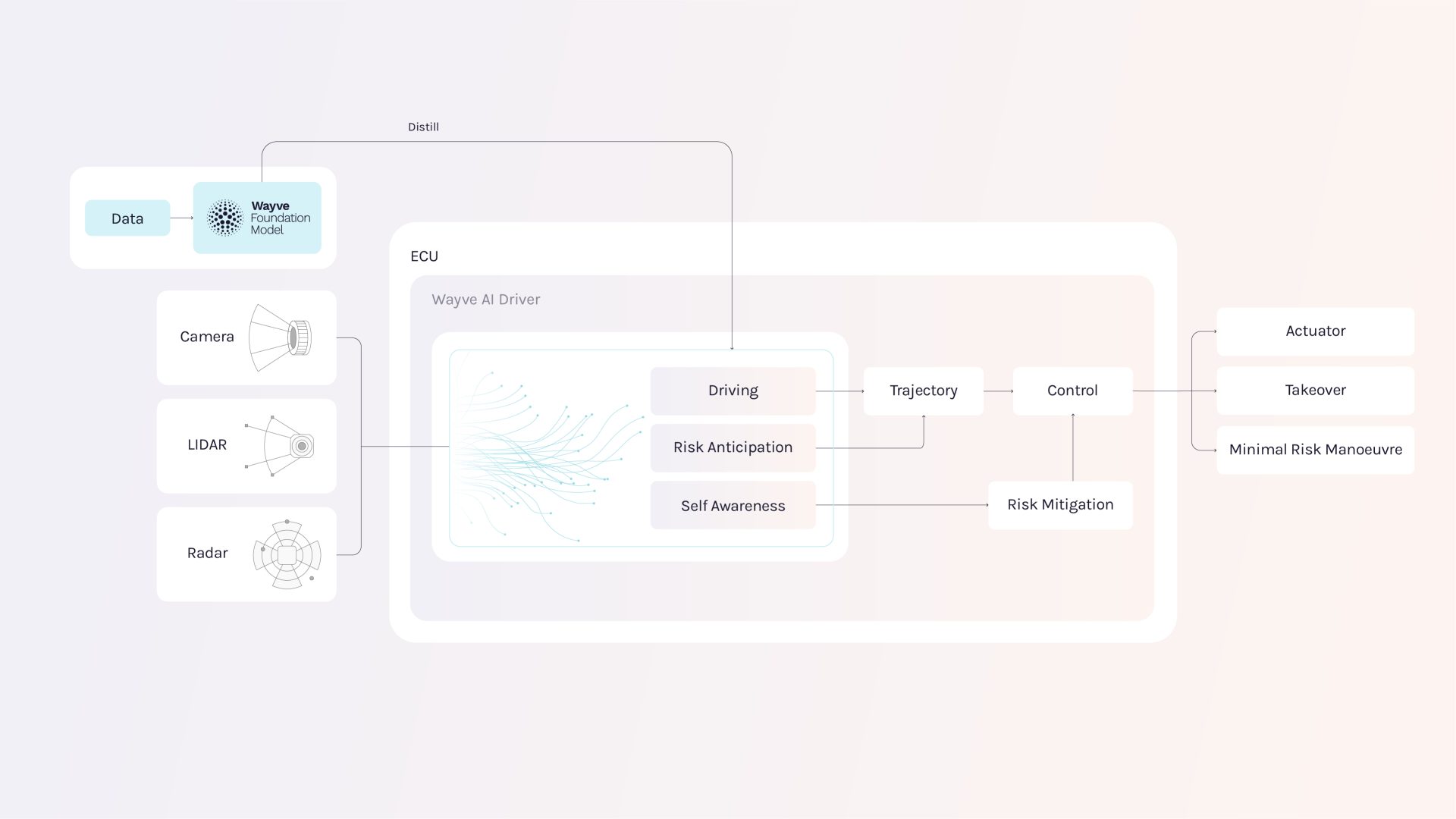
Note: This diagram does not show the fail operational capabilities needed for higher levels of automation (L3 and above)
Rather than separate doer-checker models, the AI Driver combines one shared understanding of the scene with distinct, specialized tasks within it, each responsible for a different aspect of driving. Two are especially important here:
- The driving task decides how to move — producing smooth, comfortable, traffic-rule-compliant behavior, the way a careful person drives.
- The risk-anticipation task decides what is safe to do right now — how much room, time and braking distance the moment demands.
These tasks are both learned end-to-end. Their separation lies in their objectives, evaluation, and deployment responsibilities, not in separate neural networks or modules.
Keeping them as separate tasks is a deliberate safety choice. It supports two established safety design principles:
- Functional independence. Each task has its own role and objective, with distinct training objectives and evaluation processes so a weakness in one does not automatically compromise the other. This provides functional independence. Preserving that independence when the tasks run on an automotive-grade system-on-chip (SoC) prevents them from interfering with one another, which safety engineers call freedom from interference. This is an established principle in standards such as ISO 26262 and is also relevant to assuring AI-based vehicle functions under ISO/PAS 8800.
- Complementary, diverse redundancy. The tasks assess the same scene from different perspectives: one reasons about behavior and intent, while the other focuses on geometry and physical limits. They therefore provide a learned version of the established “doer–checker” principle. Because the two views are different rather than duplicated, they are less likely to be affected by shared, common-cause errors.
Making learned safety visible
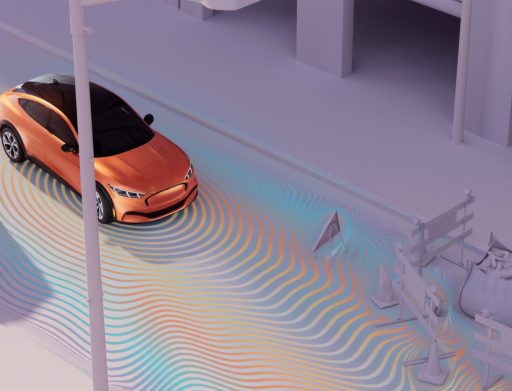
Wayve has developed a proprietary Learned Safety Envelope (LSE) to make the risk-anticipation task observable. The safety envelope provides a live visualization of risk around the vehicle, showing which actions the AI Driver judges safe or unsafe at that moment and how much margin is available.
The safety envelope is learned end-to-end from data rather than built from hand-labeled risks or a fixed set of thresholds. It makes an important part of the driving model’s safety judgment observable and auditable: engineers can inspect what the driving model considered safe and compare that judgment with the resulting driving behavior. Initial results show the safety envelope mitigates the vast majority of on-road safety-critical interventions.
The Wayve Learned Safety Envelope shows the AI Driver’s safety judgement as it moves through the scene: where it can proceed, and where it needs to take care.
This does not, by itself, prove that the complete driving system is safe. It is an inspectable, safety-relevant representation of the model’s safety judgment that can be evaluated against the vehicle’s behavior and incorporated into a broader body of safety evidence.
Unlike a fixed rule-based checker, the safety envelope responds to context and shows how the required margins change as a situation develops.
Consider a cyclist emerging from behind a parked vehicle. At first, most of the cyclist is hidden. Once the cyclist’s head appears through the parked car’s windows, the red zone in front of the vehicle begins to form. The AI Driver already increases its risk assessment before the cyclist and bicycle are fully visible.
This demonstrates an important advantage of learning from driving data. The AI Driver can respond to partial evidence that a risky situation is developing rather than waiting to identify a complete object and match it to a predefined rule.
Knowing when the AI Driver can be trusted
A third task, self-awareness, supervises the other two. The driving and risk-anticipation tasks both rest on the same shared understanding of the scene. Self-awareness monitors that understanding and recognizes when it can no longer be trusted—for example, because of unfamiliar conditions, degraded sensing, or low confidence.
When that happens, it triggers the appropriate corrective action. What “appropriate” means depends on whether there is a driver to fall back on:
- In hand-off advanced driver assistance at L2+, a human driver is present and responsible. The driver-assistance system must maintain safe, conservative behavior while returning control to the driver.
- In eyes-off automated driving at L3, the automated driving system (ADS) performs the driving task while engaged and must maintain safe control during a requested handover, including if the driver does not respond as expected.
- In fully automated driving at L4, the vehicle cannot rely on a human fallback. The ADS must be able to reach a safe state on its own.
Together, these three tasks give end-to-end AI something people often assume it cannot have: real, auditable structure—a clear separation of duties between how to act, what is safe, and whether to act at all—without fragmenting the driving architecture into brittle, disconnected modules.
This combination of a shared learned understanding with distinct, independently-assured safety responsibilities is how end-to-end AI can be both generalizable and compatible with established safety principles.
Held to the same rulebook as the rest of the industry
Wayve’s approach aligns with automotive safety standards and extends established methods where an end-to-end driving model requires additional evidence.
Classical functional safety under ISO 26262 addresses faults in engineered software, hardware and vehicle integration. ISO 21448, known as SOTIF, addresses hazards arising from functional and performance insufficiencies in intended functionality. ISO/PAS 8800 extends the assurance discussion to AI-based vehicle functions, while UL 4600 provides a safety-case framework for autonomous products.
Where existing standards do not fully prescribe how to test an end-to-end driving model, Wayve adds rigorous, evidence-based methods: large-scale behavioral testing, structured scenario coverage, uncertainty testing, and continuous monitoring in a transparent and auditable way.
How we prove it — testing, simulation, and residual risk
Producing safe behavior is only half the job. We also have to validate it with evidence.
Two facts shape how. First, the real world has a long tail: rare, unusual events that cannot be fully listed in advance and may barely appear even over millions of miles. On-road mileage alone cannot efficiently establish confidence across this long tail.
🇬🇧 The LSE navigating the complexity of London
Second, the AI Driver must be evaluated as part of the complete driving system. What matters is how that complete system behaves, not how one model or component scores in isolation.
We therefore combine closed-loop simulation, targeted on-road testing, and classical software validation. Simulation provides controlled breadth; road testing provides depth; software validation confirms that the code and vehicle integration perform as intended.
The resulting evidence is assessed against explicit release criteria and supports an auditable judgment of residual risk. Field data informs future model releases, each of which is revalidated before deployment. Part 2 explains this validation framework in detail.
A Safe, Superhuman AI Driver
End-to-end AI is not a black box.
Designed and developed properly, end-to-end AI offers a credible path toward matching—and ultimately exceeding—the safety of a competent, careful human driver across diverse environments, not only on pre-mapped roads. It learns judgment from experience, builds safety into its decisions, keeps safety-critical responsibilities clearly defined and cross-checked, and continually strengthens the evidence supporting its safety case. End-to-end learning can accelerate each of these safety capabilities, not just the driving task, with the scale and generalizability needed to serve our global automotive customers.
Validation: Turning Behavior Into Evidence
Traditional validation can depend on a sprawling network of requirements, tests and hand-crafted metrics that becomes harder to maintain as vehicles, operating domains and system capabilities change.
Wayve’s Validation 2.0 approach breaks this cycle by applying the scaling properties of AI to validation itself.
Learn more
4 November 2026 | Engineering
Language Should Ride Shotgun, Not Stall the Control Loop
In the final part of our series exploring our approach to learned safety, we look at the role of semantic intelligence in physical control and safety assurance.
Read more
4 November 2026 | Engineering
Validating the AI Driver
In Part 2 of our series exploring our approach to learned safety, we explore how Validation 2.0 fundamentally reshapes how enterprises develop and deliver AV products beyond mere efficient scaling.
Read more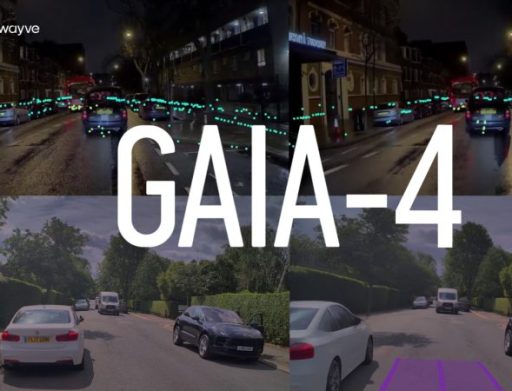
3 August 2026 | Research
GAIA-4: Multimodal World Models Powering Closed-Loop Simulation for Safe and Scalable Autonomy
The latest evolution of GAIA, GAIA-4, puts the Wayve AI Driver in the loop, transforming world modeling from scene generation into a way to measure end-to-end safety at scale.
Read more