




Safety

Learned Safety: Building Trustworthy Embodied AI

Since 2017, Wayve has been developing end-to-end embodied AI that offers a fundamentally different path to solve autonomous driving’s long-tail problem. Rather than attempting to anticipate every possible situation through maps, pre-defined rules, and human-engineered representations, we believe that intelligence must learn to drive competently and generalize from experience.

Nearly a decade later, our work has advanced from that thesis to real-world proof as we bring the Wayve AI Driver to production around the world with our partners. Now there’s a more concrete question:

How do we build, observe, and validate safety within an end-to-end AI Driver at global scale?

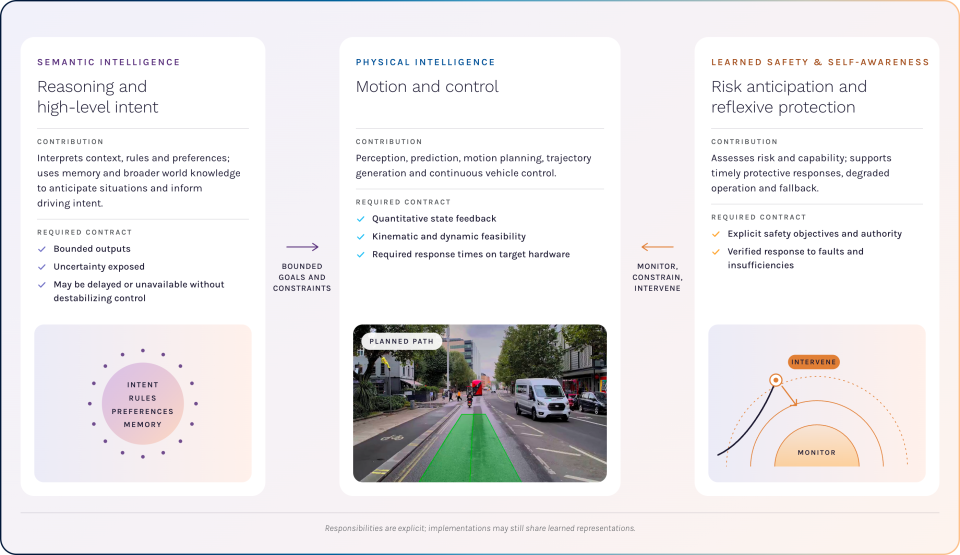
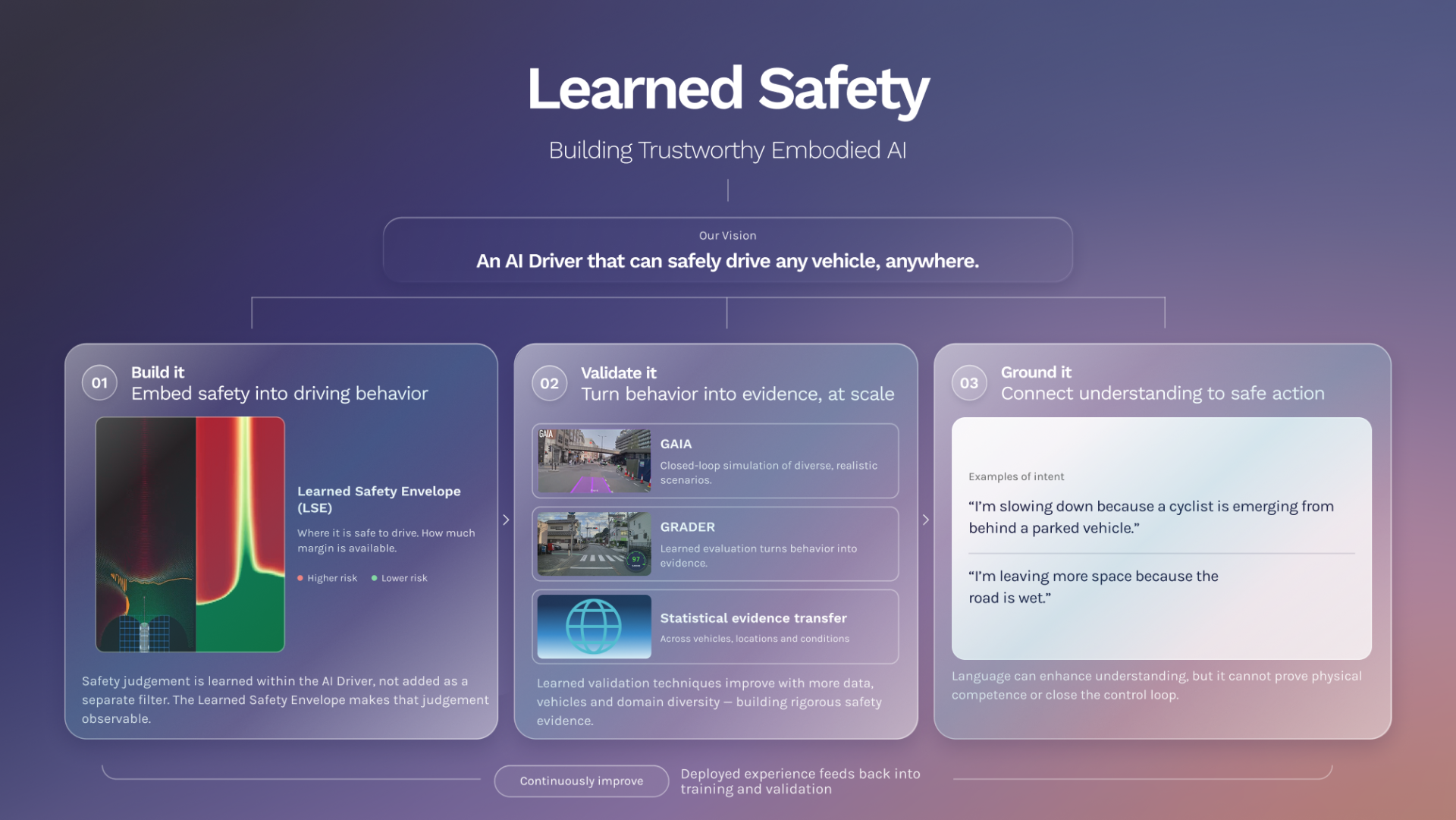
infographic showing approach to learned safety

This is a fundamental challenge for embodied AI. Unlike AI systems that operate in a digital world, embodied intelligence must interact with a physical environment that is complex, dynamic and unpredictable. It must learn not only to understand its surroundings, but to make decisions and take actions that account for real-world risks. Autonomous driving is one of the most demanding applications of this challenge, where the consequences of an incorrect decision can be immediate and significant.

To date, the AV industry has often favored benchmarks that are easier to inspect, count, or explain as stand-ins for safety evidence: stacks divided into separate components from perception to planning, accumulated mileage and disengagement rates, or human-readable explanations of a system’s actions. Each can contribute to a safety case. None establishes safety on its own.

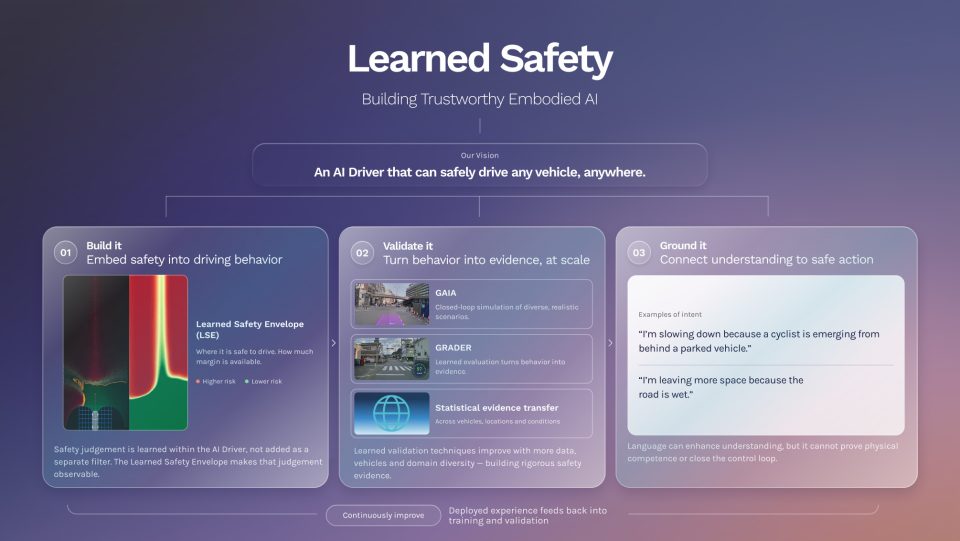
infographic of approach to learned safety

Learned Safety

Building Safety Into End-To-End AI

At Wayve, we believe safety must be part of how the AI Driver learns to understand and act in the physical world, rather than a checker or constraint imposed after the action’s been decided. Just like driving, embodied AI safety improves faster with learned representations than with anything hand-engineered.

But learning safe behavior is only part of the challenge. We must also make safety-relevant judgments observable, evaluate the complete driving system, and establish credible evidence that its residual risk is acceptable. 

In this three-part blog series, we explore the principles and technologies behind Wayve’s approach to Learned Safety, the notion that, like driving, safety and validation are best solved with end-to-end deep learning.

red and green gradient background
Build it

Embed safety into behavior

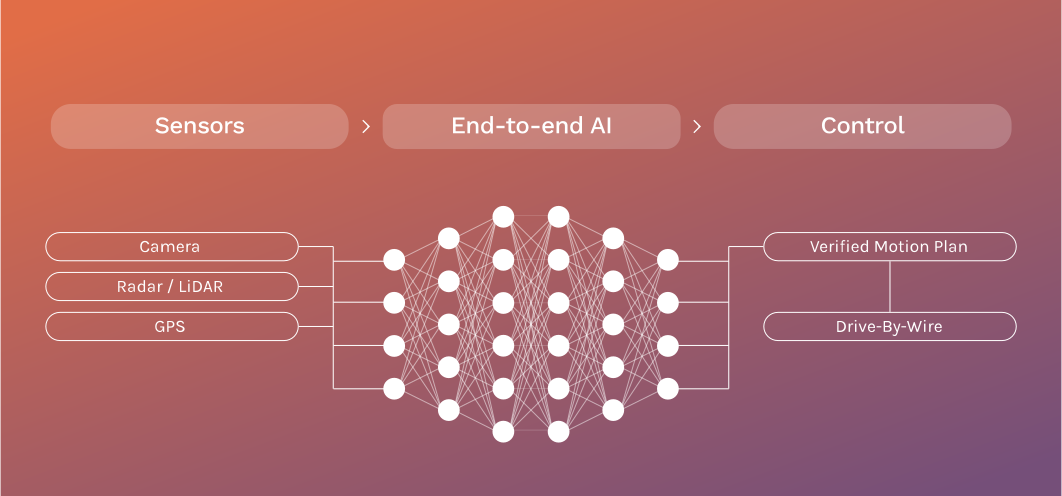
The Wayve AI Driver is our embodied AI driving software, designed to support advanced assisted and automated driving across many vehicle types. In our end-to-end AI architecture, safety assessment is part of how the AI Driver makes decisions, not a “checker” filter applied afterward. 

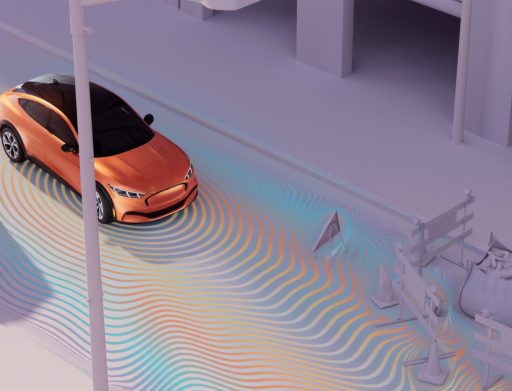
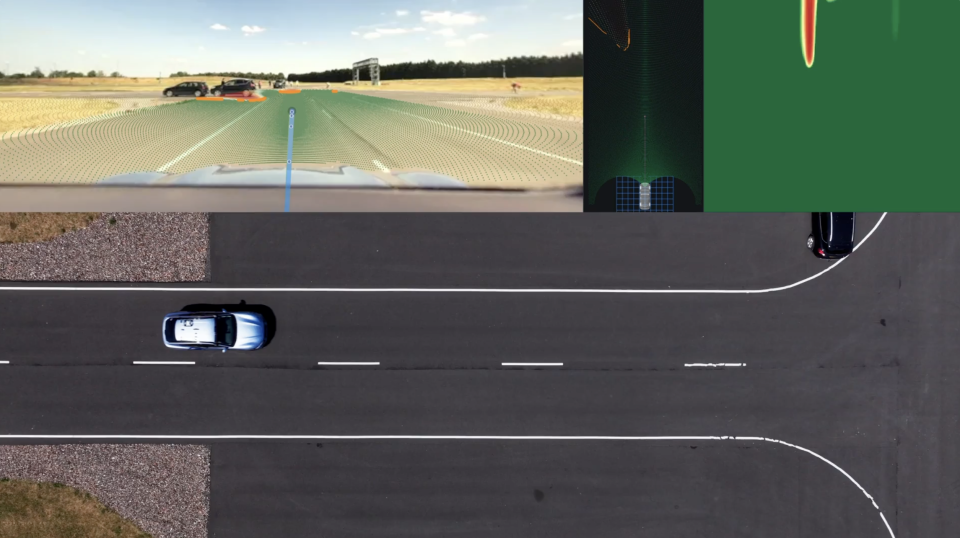
We have developed the Wayve Learned Safety Envelope (LSE), a proprietary learned capability within our driving model that incorporates safety judgment into decision-making and makes it observable through a heatmap that envelops the vehicle and shows where it is and isn’t safe to drive. Together with clearly defined safety responsibilities, Wayve LSE helps answer three questions: how to act, what is safe, and whether the AI Driver can continue with confidence.

navy purple and orange gradient map
Validate it

Turn behavior into evidence

Traditional validation can depend on a sprawling network of requirements, tests, and hand-crafted metrics that become harder to maintain as vehicles, operating domains and system capabilities change.

Wayve’s Validation 2.0 approach breaks this cycle by applying the scaling properties of AI to validation itself, so validation improves with more data, vehicles, and driving domain diversity too. 

Closed-loop simulation with GAIA, learned evaluation through our reward model, GRADER (Generalizable Reward for Autonomous Driving Evaluation and RL), and statistical evidence transfer work together to turn observable behavior into a rigorous safety argument.

Ground it

Connect understanding to safe action

Language and reasoning can bring broader semantic and contextual knowledge to embodied AI, helping systems better understand unfamiliar situations, anticipate hazards, and make better driving decisions. These capabilities can contribute to safer behavior, but their benefits must be demonstrated. 

Better understanding does not replace learned safety capabilities or rigorous verification and validation of the complete system. Nor does a human-readable explanation, on its own, establish that an action is safe. We explore how richer understanding can support timely, physically competent action, with safety learned end to end, and how to evaluate its effectiveness across scenarios the system may encounter.

Learned Safety

What this means for Embodied AI

The promise of embodied AI is intelligence that can learn to operate in the physical world, adapting to environments and situations it has never encountered before. Realizing its potential requires keeping safety central to how these systems learn and act, alongside verification and validation methods that scale with their capabilities.

Discover what Wayve is learning as we work towards our vision: an AI Driver that can safely drive any vehicle, anywhere.

Aligning with established Safety Standards

Wayve’s Learned Safety approach also aligns with critical safety principles, including redundancy, fail-operational behaviors, and adherence to automotive safety standards such as ISO 26262 and SOTIF.

Leveraging synthetic data

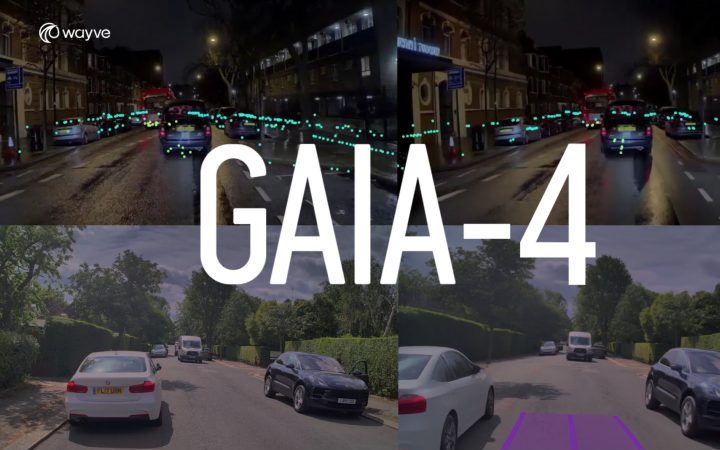
Wayve’s GAIA powers our closed-loop simulation, evaluating safety in critical situations.

Learn about GAIA

Expanding through large partner fleets

Quickly acquiring diverse driving data through collaborations with partner fleets.

Utilizing scalable cloud infrastructure

Collaborating with Microsoft for supercomputing infrastructure to support AI training and data workloads on a global scale.

Wayve car navigation the streets in Japan

Learn more about our approach to safety

Back to top
This site is registered on wpml.org as a development site. Switch to a production site key to remove this banner.