







Embed safety into behavior
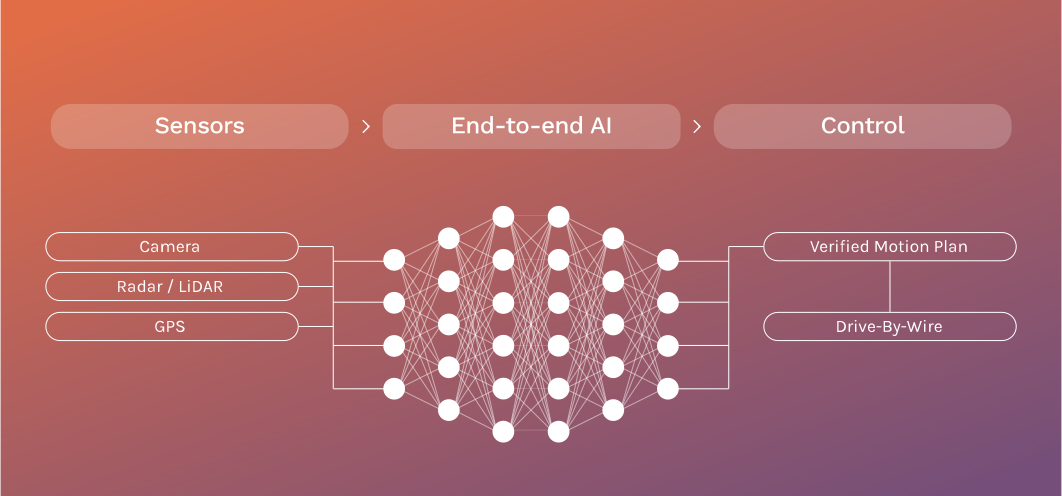
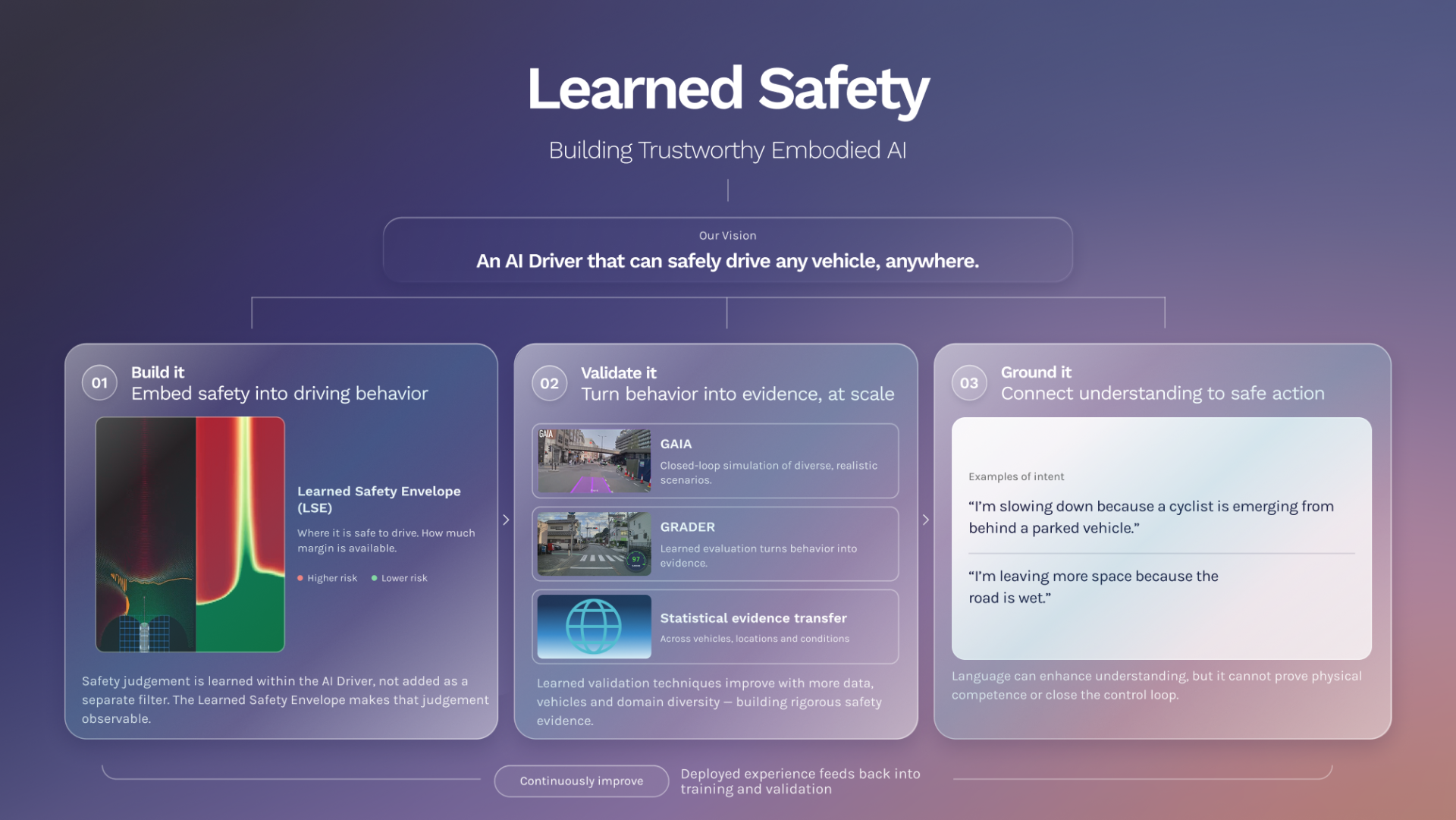
The Wayve AI Driver is our embodied AI driving software, designed to support advanced assisted and automated driving across many vehicle types. In our end-to-end AI architecture, safety assessment is part of how the AI Driver makes decisions, not a “checker” filter applied afterward.
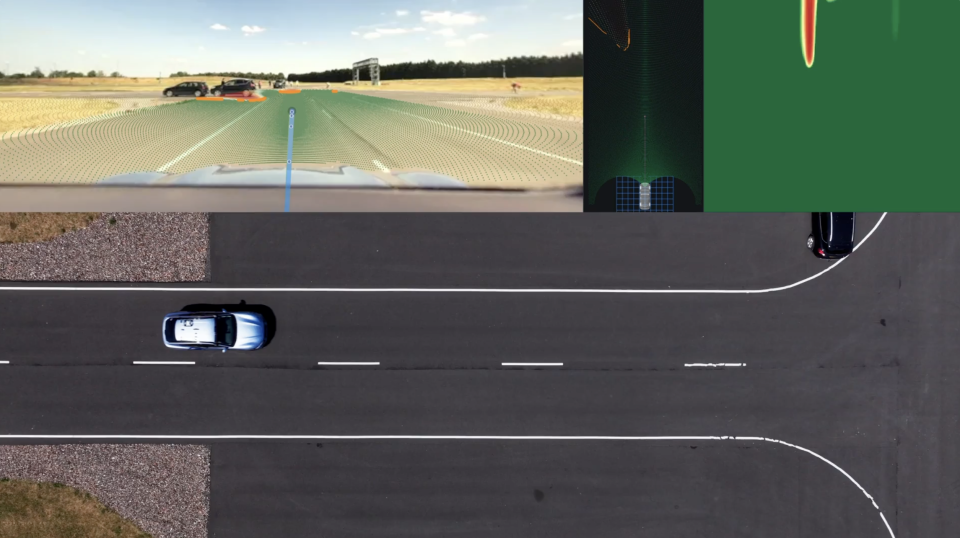
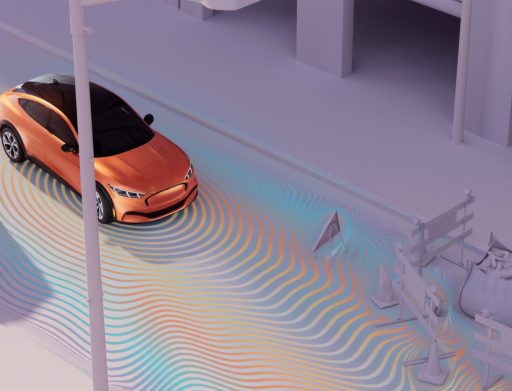
We have developed the Wayve Learned Safety Envelope (LSE), a proprietary learned capability within our driving model that incorporates safety judgment into decision-making and makes it observable through a heatmap that envelops the vehicle and shows where it is and isn’t safe to drive. Together with clearly defined safety responsibilities, Wayve LSE helps answer three questions: how to act, what is safe, and whether the AI Driver can continue with confidence.

Turn behavior into evidence
Traditional validation can depend on a sprawling network of requirements, tests, and hand-crafted metrics that become harder to maintain as vehicles, operating domains and system capabilities change.
Wayve’s Validation 2.0 approach breaks this cycle by applying the scaling properties of AI to validation itself, so validation improves with more data, vehicles, and driving domain diversity too.
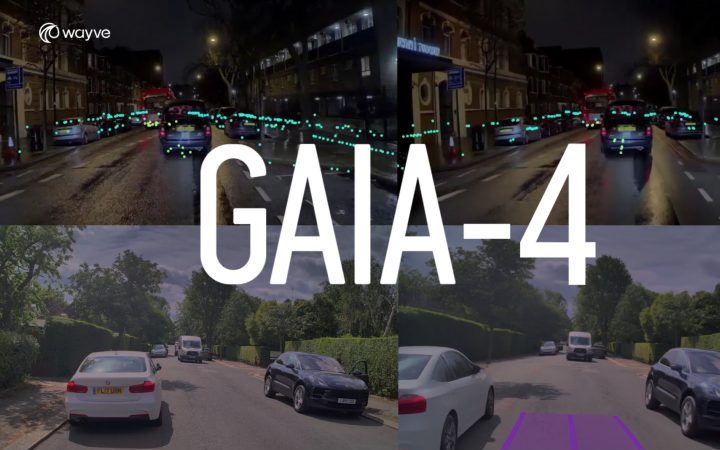
Closed-loop simulation with GAIA, learned evaluation through our reward model, GRADER (Generalizable Reward for Autonomous Driving Evaluation and RL), and statistical evidence transfer work together to turn observable behavior into a rigorous safety argument.

Connect understanding to safe action
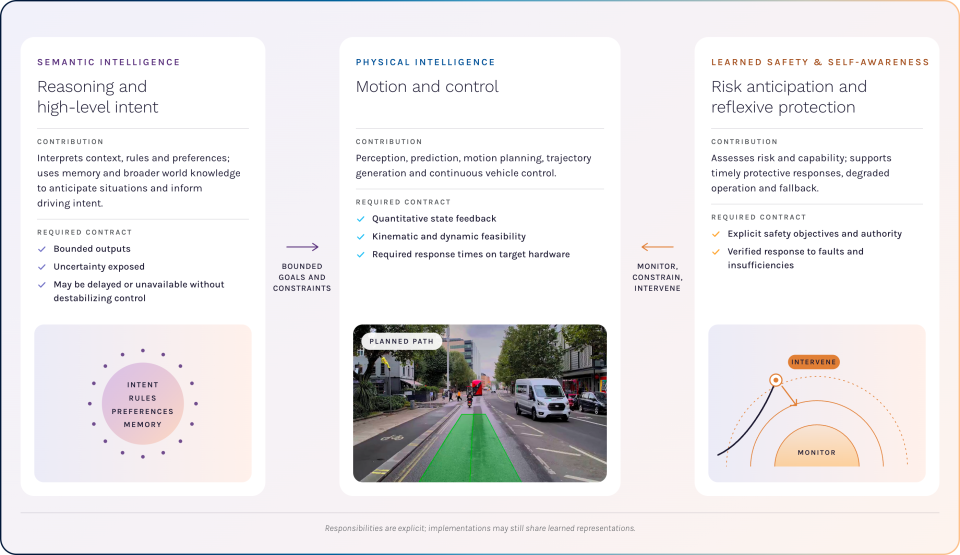
Language and reasoning can bring broader semantic and contextual knowledge to embodied AI, helping systems better understand unfamiliar situations, anticipate hazards, and make better driving decisions. These capabilities can contribute to safer behavior, but their benefits must be demonstrated.
Better understanding does not replace learned safety capabilities or rigorous verification and validation of the complete system. Nor does a human-readable explanation, on its own, establish that an action is safe. We explore how richer understanding can support timely, physically competent action, with safety learned end to end, and how to evaluate its effectiveness across scenarios the system may encounter.